

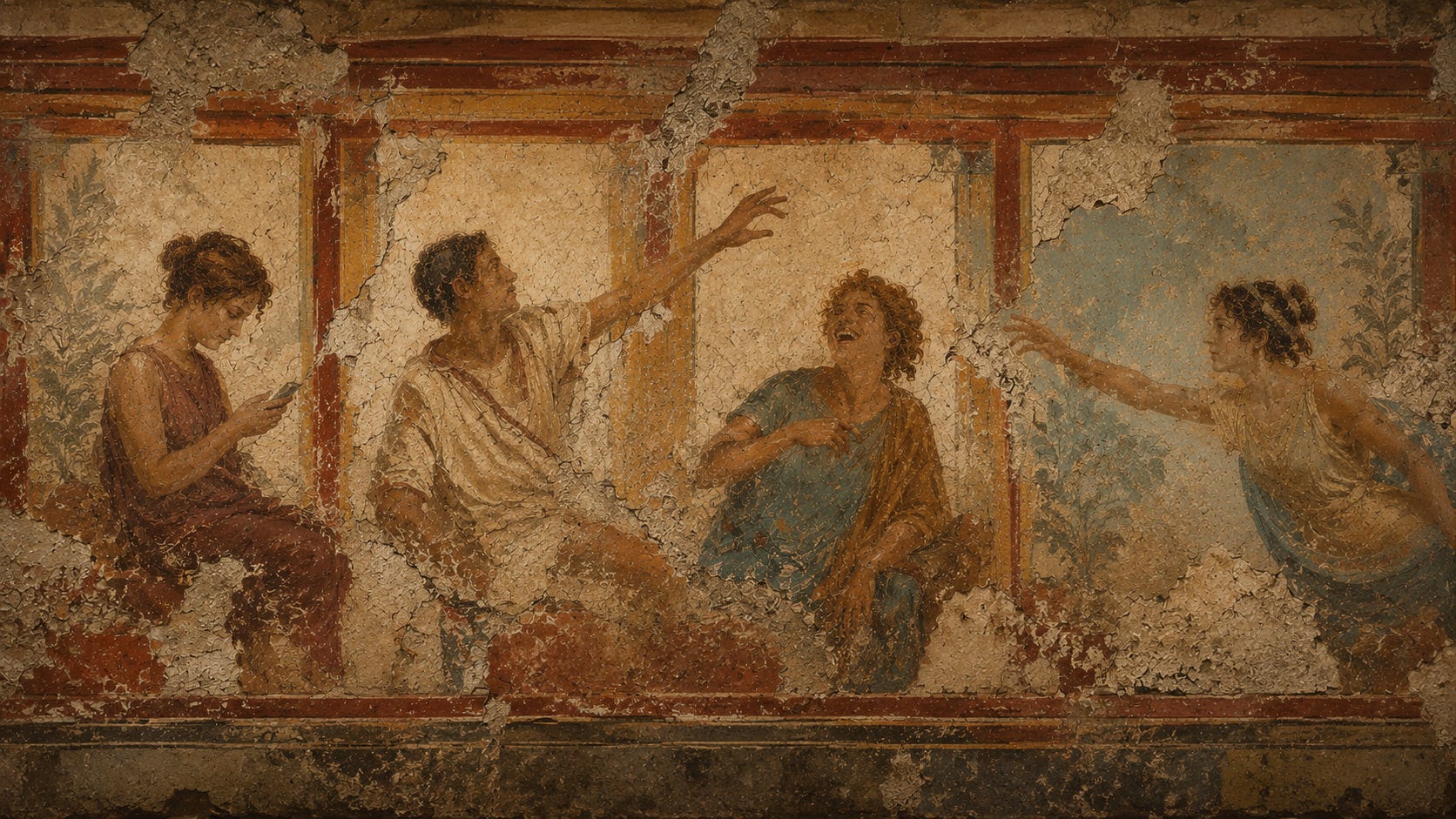
Dentro de mil años, un arqueólogo encontrará un instante de tu mundo. ¿Qué verá?
A veces creemos que la historia está hecha de guerras, tratados y grandes nombres. Pero Pompeya nos recordó otra cosa.
Lo que sobrevivió no fueron solo templos. Fueron panes dentro de hornos. Una mano sobre una pared. Un perro atado. Personas detenidas en medio de una acción tan pequeña que jamás imaginaron que sería la última.
Quizá una civilización no queda resumida por aquello que construye. Quizá queda resumida por aquello que estaba haciendo cuando el tiempo decidió interrumpirla.
✦ ✦ ✦
Premisa
Una explosión letal ocurre en algún lugar de la Tierra. No importa su origen: puede ser natural, tecnológico, químico o algo todavía inexplicable. Por causas extraordinarias, el instante queda preservado.
Siglos después —en el siglo treinta— arqueólogos descubren el sitio intacto. Las personas, los objetos y los gestos permanecen detenidos exactamente en el momento en que el tiempo se rompió.
Tu relato ocurre durante la excavación. Pero el centro de la historia no es la catástrofe. Es aquello que los arqueólogos creen entender sobre nosotros… y aquello que terminan entendiendo mejor de lo que nosotros mismos lo hacíamos.
✦ ✦ ✦
Restricciones / Reglas duras
Los arqueólogos deben interpretar erróneamente al menos un objeto, gesto o costumbre humana.
Al menos una de esas interpretaciones erróneas debe contener una verdad incómoda que el lector reconozca sobre sí mismo, no sobre los personajes.
El origen de la explosión puede explicarse… o permanecer desconocido.
El relato debe construir una asimetría: el lector reconoce el escenario antes que los arqueólogos, y esa ventaja inicial debe volverse incómoda hacia el final, cuando la conclusión o pregunta final altere la manera en que el lector ve su propia época.
✦ ✦ ✦
No excavamos el pasado para encontrar objetos. Excavamos para descubrir quiénes éramos cuando nadie nos observaba.
(English version)
The Thirtieth Century
A thousand years from now, an archaeologist will uncover a frozen instant of your world. What will they see?
We sometimes believe history is made of wars, treaties, and great names. But Pompeii reminded us otherwise.
What survived were not only temples. It was bread inside ovens. A hand against a wall. A dog tied to a post. People frozen mid-action, in gestures so small they never imagined they would be their last.
Perhaps a civilization is not defined by what it builds. Perhaps it is defined by what it was doing when time decided to interrupt it.
✦ ✦ ✦
Premise
A lethal explosion occurs somewhere on Earth. Its origin does not matter: it may be natural, technological, chemical, or something still beyond explanation. By extraordinary means, the moment is preserved.
Centuries later —in the thirtieth century— archaeologists discover the site intact. The people, the objects, the gestures remain suspended at the exact moment time broke.
Your story takes place during the excavation. But the center of the story is not the catastrophe. It is what the archaeologists believe they understand about us… and what they end up understanding better than we ever did ourselves.
✦ ✦ ✦
Restrictions / Hard Rules
The archaeologists must misinterpret at least one object, gesture, or human custom.
At least one of those misinterpretations must contain an uncomfortable truth that the reader recognizes in themselves, not in the characters.
The origin of the explosion may be explained… or may remain unknown.
The story must build an asymmetry: the reader recognizes the setting before the archaeologists do, and that initial advantage must become uncomfortable by the end, when the final conclusion or question alters the way the reader sees their own time.
✦ ✦ ✦
We do not excavate the past to find objects. We excavate to discover who we were when no one was watching.